How Scientists Identify Humpback Whales in Samaná
When a humpback whale surfaces in Samaná Bay, it may appear similar to other whales nearby. Yet marine researchers can sometimes recognize the same individual years after its first recorded sighting.
This ability comes from a scientific method known as photo-identification. Researchers collect photographs of distinctive whale features and compare them with images stored in identification catalogs. Over time, these records can help scientists investigate whale movements, return visits, population patterns, and connections between different marine regions.
For visitors interested in Samaná whale watching, this research reveals how individual encounters can contribute to a much larger understanding of humpback whales.
1. Why Do Scientists Need to Identify Individual Whales?
Counting whales during a single trip provides only a snapshot of what is happening in the ocean. Researchers often need to know whether an animal has been seen before, where it was recorded, and whether it appears in later observations.
Individual identification helps scientists investigate questions such as:
- Do particular whales return to the same breeding region?
- How frequently are individual whales observed in different years?
- Are whales photographed in Samaná also recorded in northern feeding areas?
- How do researchers distinguish repeated sightings from new individuals?
- What can long-term records reveal about whale movements?
A whale recorded on several occasions should not automatically be counted as several different animals. Reliable identification helps researchers avoid this mistake and interpret their observations more accurately.
2. How Does a Whale Identification Catalog Work?
A photo-identification catalog is an organized collection of photographs and associated observation records.
Researchers may store images alongside details such as the observation date, location, photographic quality, and distinctive features visible in each image.
When a new photograph is collected, researchers compare it with existing catalog entries to determine whether the whale may already be known.
A simplified research workflow looks like this:
- Collect photographs: Researchers photograph identifiable features when conditions allow.
- Check image quality: They determine whether the relevant markings are visible clearly enough for comparison.
- Record observation details: Date, location, and other available information are linked to the image.
- Compare existing records: Researchers search for a possible match in the catalog.
- Review the identification: A match is accepted only when the evidence is sufficiently convincing.
- Update the record: The new observation can be added to the individual's history.
Not every photograph produces a reliable identification. Poor lighting, movement, distance, or an incomplete view may make a match uncertain.
3. What Information Can Researchers Learn From Repeat Sightings?
When a whale is identified in multiple observations, researchers can begin building a record of its known movements.
For example, a whale photographed in a breeding area may later be recorded in another location. If the images can be matched confidently, researchers gain evidence that the same individual has been observed in both places.
Repeated sightings can help researchers study:
Seasonal movements: Records may show when a whale was observed in different regions.
Site use: Researchers can investigate whether individuals are recorded repeatedly in a particular area.
Long-term patterns: Observations collected over several years can reveal changes in when and where whales are encountered.
Connections between regions: Shared identification records can help researchers understand how breeding and feeding areas are connected.
However, a missing sighting does not necessarily mean a whale has disappeared or stopped using a region. It may simply have gone unobserved.
4. Why Are Accurate Dates and Locations So Important?
A photograph is more useful when researchers know when and where it was taken.
Without reliable observation details, a distinctive whale image may be difficult to place within a larger migration or population study.
Researchers therefore maintain records that connect images with their original observations. They may also document uncertainty, especially when location details or photographic quality are incomplete.
For example, two matching photographs taken in different regions could provide evidence of movement between those locations. But the strength of that conclusion depends on the accuracy of the identification and the reliability of the observation records.
Good scientific documentation helps prevent assumptions from becoming accepted facts.
It also allows researchers to revisit older records when improved methods or additional photographs become available.
5. How Do Researchers Share Whale Identification Records?
Whales travel across international waters, so understanding their movements may require information collected by different research teams.
Photo-identification catalogs can support collaboration when researchers share compatible records and follow appropriate data-management practices.
A photograph collected in one region may be compared with records from another region if the images and observation details are available.
Collaboration can help scientists investigate movement patterns that would be difficult to understand using observations from a single location.
However, not every catalog is publicly accessible, and not every research group uses the same system. Access, data quality, and identification procedures can vary between projects.
Researchers must also ensure that shared records are interpreted carefully. A possible match should not be treated as certain until it has been adequately evaluated.
6. What Can Whale Identification Tell Us About Samaná Bay?
Samaná Bay is part of a wider Caribbean region used by North Atlantic humpback whales during the breeding season.
Identification records can help researchers investigate how individual whales use this region and how their movements connect with other parts of the North Atlantic.
When a whale is documented in multiple seasons, the records may help establish that the individual has returned to the broader area. When matching photographs are available from other regions, they may also provide evidence of movement between locations.
These findings contribute to understanding the ecological importance of Samaná and the wider marine environment.
It is important, however, to distinguish between an individual identification and a conclusion about the entire population. A collection of sightings can provide valuable evidence, but population-level conclusions generally require appropriate methods and enough reliable data.
7. Can Tourists Help Scientists Identify Whales?
Some scientific projects and conservation organizations welcome photographs or observations from members of the public. Others rely on trained researchers and specific collection procedures.
If you would like to contribute, check whether a reputable research organization or established citizen-science project accepts whale photographs.
Useful contributions may require:
- Original photographs with sufficient image quality.
- The date and approximate location of the sighting.
- Information about the direction or angle of the photograph.
- Accurate descriptions without guessing the whale's identity.
- Permission to share the image under the project's stated conditions.
Do not assume that every photograph taken on a whale-watching trip will be suitable for scientific identification. Some images may lack the detail needed for a confident match.
Visitors should also follow the operator's instructions and applicable wildlife rules rather than changing their behavior to obtain a better photograph.
8. Why Does Long-Term Whale Research Matter?
Individual whale records become more valuable when researchers can compare observations across many years.
Long-term data may help scientists investigate how whales use different habitats, whether particular individuals return to breeding areas, and how their movements vary between seasons.
Such information can contribute to conservation planning and marine management.
It may also help researchers identify gaps in existing knowledge. For instance, if observations are concentrated in one region, scientists may need additional information from other locations to understand the wider movement patterns.
Long-term research is therefore not simply about collecting more photographs. It involves maintaining reliable records, checking identifications, sharing suitable information, and interpreting findings carefully.
Frequently Asked Questions
How do scientists identify individual humpback whales?
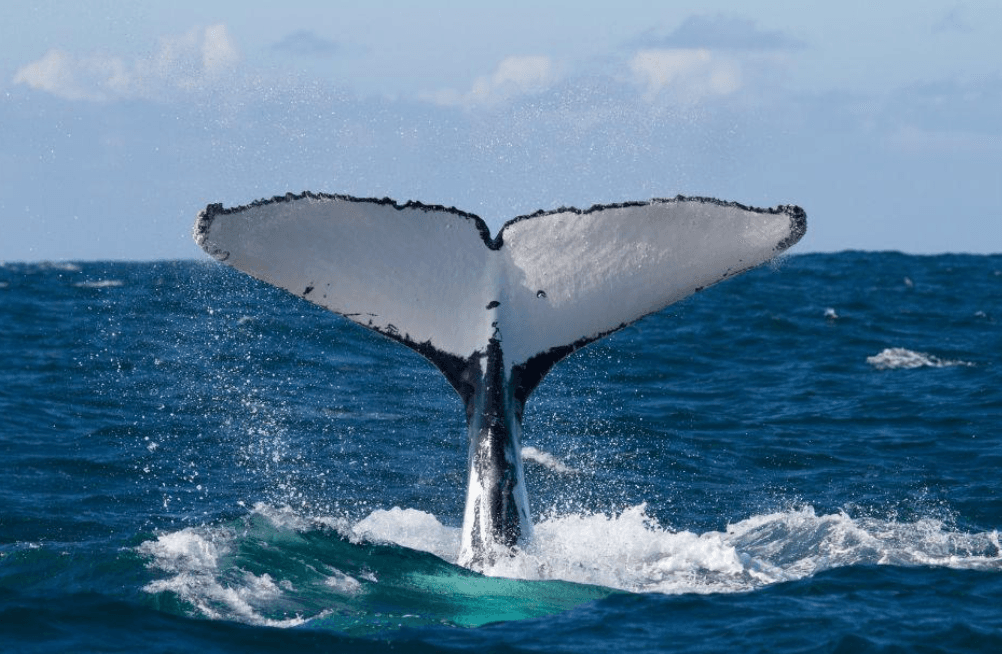
Researchers commonly compare photographs of distinctive features, particularly the underside of the tail flukes, with existing identification records.
Can researchers identify every whale they photograph?
No. Some images are too unclear or incomplete to support a reliable match. Researchers may classify an identification as uncertain rather than make an unsupported conclusion.
Do humpback whales return to Samaná every year?
Some individuals have been recorded across multiple seasons, but not every whale returns to the same location every year. Individual movements vary.
What is a whale photo-identification catalog?
It is an organized collection of whale photographs and observation records used to compare individuals and study their movements over time.
Can tourists submit whale photographs to researchers?
Some projects accept public photographs, but requirements differ. Contact an established research organization before submitting images or assuming they can be used for scientific identification.
Why are whale identification records useful for conservation?
They can help researchers study movements, habitat use, and repeated sightings, contributing evidence for broader population research and conservation planning.
Final Thoughts
Identifying an individual humpback whale is more than recognizing a familiar shape. It involves collecting reliable photographs, recording accurate observation details, comparing images carefully, and maintaining records that can be studied over time.
In Samaná, this research helps connect individual whale sightings with a broader picture of seasonal movements and marine habitat use.
The next time you see a humpback whale, remember that a photograph may capture more than a memorable moment. When collected responsibly and documented accurately, it may also contribute to a growing scientific record of these remarkable animals.

Local explorer & expert guide in Salto El Zumbador.